IPPR 005
· 약 2분

Pattern recognition
- recognizing patterns of interest oin data
- applications
- image and video analysis
- speech analysis
- natural language processing
- genomic research and bioinformatics
- data mining and analytics for business, finance, marketing, trade
- network traffic analysis
- analysis of Web data
- social media analysis
ML Problems
- Classification: predict a categorical value from an array of numerical/categorical features.
- The input is assigned to the class with the highest score/probability.
- Regression: predict a numerical value from an array of numerical/categorical features.
- Clustering: group numerical data homogeneously into clusters.
Probabilistic Classifier
- The class scores are simply bounded between 0 and 1 and add up to 1 over all classes.
- probability of class given input , or .
- All contemporary deep learning classifiers are probabilistic.
- Training objective: assign the largest possible probability to the correct labels.
Hyperparameters
- Type of model: logistic regression, CNN, random forest, SVM etc.
- Size of a mask (3x3, 5x5) or of feature vector (100, 200)
- Number of clusters
- All discrete choices and any coefficient within the loss function.
Datasets
- Training set: it is used with the loss function to automatically find the optimal parameters for various, arbitrarily chosen values of the hyperparameters
- Validation set: it is used to find the best values for the hyperparameters (best performance evaluation metric)
- Test set: it is used with the chosen parameters and hyperparameters to measure and report the final model’s accuracy/performance
Popular algorithms
- K-means
- K-medoids, or PAM (partitioning around medoids)
- Other female-named clustering algorithms:
- AGNES
- DIANA
- DAISY
Models
- U-Net: Classify individual pixels rather than entire images
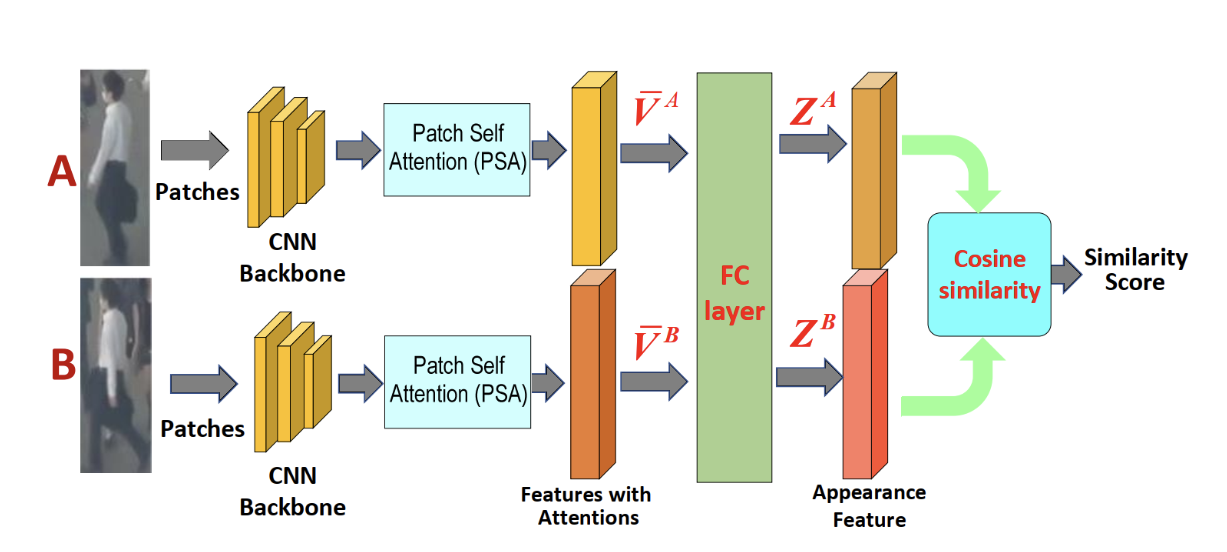
- SMILETrack: track objects in video having a certain shape
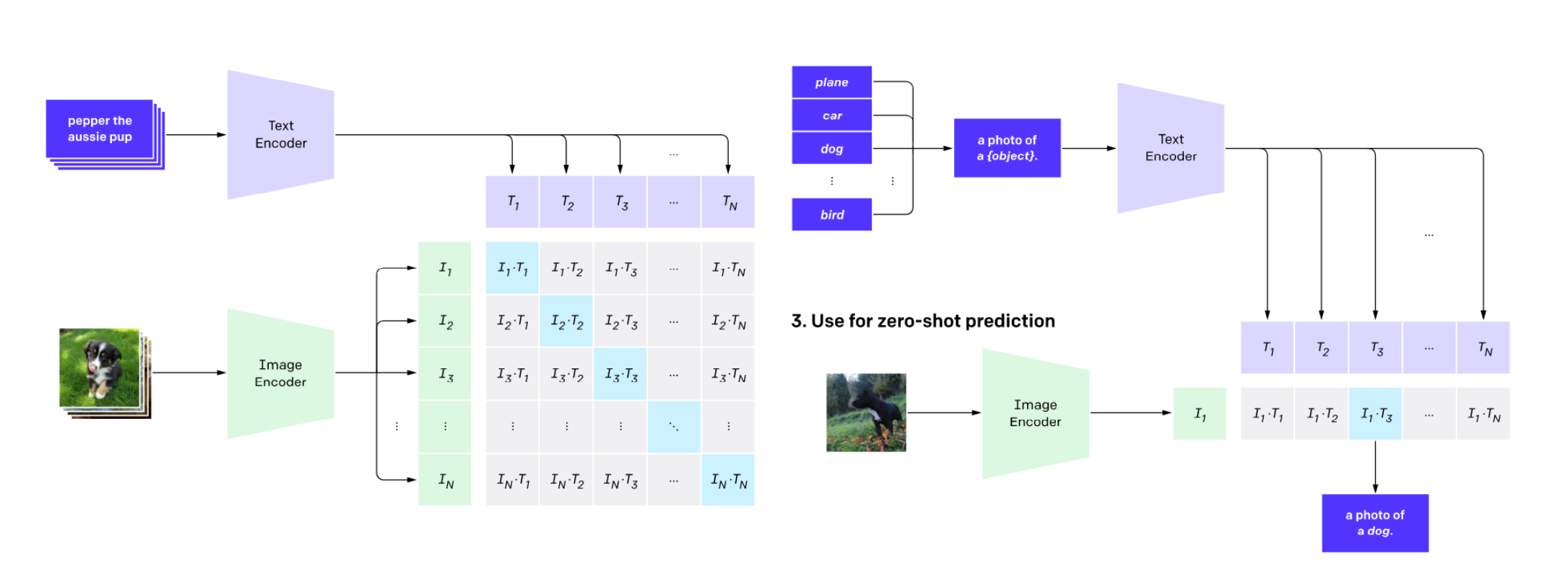
- OpenAI CLIP: Trained with pairs of images and captions, and at run time is able to classify images into any category of choice
- Stable Diffusion