
본문으로 건너뛰기

"tim" 태그로 연결된 4개 게시물개의 게시물이 있습니다.

모든 태그 보기

TIM 004

· 약 3분

Innovation Ecosystem

  • A network of organizations, people and resources that interact with each other to develop and support new ideas, technologies and businesses.
  • Innovation Ecosystem
    • Start-up companies
    • Medical Centers
    • Mature Companies
    • City, Regional and State Organizations
    • Providers of Support Services (Legal, Accounting, etc)
    • Venture Capital Funds
    • Colleges & universities

Type of Innovation Ecosystem

  • Corporate innovation ecosystem
  • Digital innovation ecosystem
  • City-based innovation ecosystem
  • High-tech SMEs centered ecosystem (Small and Medium-sized Enterprises)
  • University-based ecosystem
  • Incubators and Accelerators ecosystems
  • Regional and National innovation ecosystems
  • Social innovation ecosystems

The core -> New Innovation Initiatives -> Startup Ecosystem -> Customers

Roles and Activites across Innovation Ecosystem

  • Leadership:
    • Ecosystem leader
      • ecosystem governance: decipher roles, coordinate interactions, orchestrate resource flows
      • forging partnerships: attract & link partners, create collaboration, stimulate complementary
      • platform management: build platform, open platform, orchestrate compleentors
      • value management: decipher bases of value, create & capture value
    • Dominator: integrate actors
  • Direct Value Creation:
    • Supplier: supply components
    • Assembler: assemble components
    • Complementor: provide complementarities
    • User: define need, provide ideas, purchase & use
  • Value Support:
    • Expert: generte knowledge, provide expertise, transfer technology
    • Champion: build connections, provide access to markets
  • Entrepreneur Ecosystem:
    • Entrepreneur: co-locate, set-up network
    • Sponsor: give resources, co-develop offering, link to other actors
    • Regulator: provide favorable conditions

Systems Thinking

  • a holistic and non-linear approach to problem solving that focuses on the interactions and patterns within an entire system
  • emphasizes relationships and feedback loops instead of analysing individual parts in isolation

Fishbone Diagram

  • common categories to help think broadly about the possible causes include:
  • People: skils, training, communication, motivation
  • Process / Methods: procedures, or workflows
  • Machines / Techonology: tools, equipment, software
  • Materials: resources or inputs used
  • Environment: workplace or external conditions
  • Mangement / Policies: decisions, rules, or leadership

Innovation Networks

  • connected systems of people working together toward shared objectives, often through internal teams and external partners such as suppliers, universities, accelerators, customers, and startups.
  • is also part of innovation ecosystem

Types of Innovation Networks

  • Enterpreneur-based
  • Internal project teams
  • Internal enterpreneur networks
  • Communities of practice: can involve players inside and across different organizations
  • Spatial clusters: like Silicon Valley, Boston, etc
  • Sectoral networks: bring different players together because they share a common sector
  • New product or process develoment consortium
  • New technology development consortium
  • Emerging standards: Exploring and estabilishing standards around innovative technologies
  • Supply chain learning
  • Learning networks
  • Recombinant innovation networks: Cross-sectoral groupings that alloow for networking across boundaries and the transfer of ieads.
  • Managed open innovation networks
  • User networks
  • Innovation markets
  • Crowdfunding and new resource approaches

Stakeholder Analysis

  • High power, highly interested people (Engage Closely)
  • High power, less interested people (Keep Satisfied)
  • Low power, Highly interested people (Keep Informed)
  • Low power, less interested people (Monitor)
TIM 003

· 약 3분

Push & Pull Factors

  • Techonology - Push (Supply-side Pushing Innovation)
  • Demand - Pull (Demand-side Pulling Innovation)
Technology PushDemand Pull
Starts with Scientific BreakthroughStarts with Customer need
iPadZoom (COVID-19)
VR HeadsetSelfie Stick
Post-it NotesTesla Model 3

Disruptive Innovation

  • Creative Destruction
    • a process by which new innovations and technological advancements ("creative")
    • desmantle long-standing economic structures, practices, and organizations ("destruction")
    • while creating new markets and opportunities
  • Disruptive Innovation
    • a process where a smaller company successfully challenges estabilished businesses bgy offering simpler, more affordable, or more accessible products or services.
    • low-cast, low-performance, alternative, improve over time and displace established playwers
  • Innovator's Dilemma
    • successful, well-managed companies often fail when disuptive technologies emerge
    • even when they do everything "right" according to traditional management principles.
Sustaining InnovationDisruptive Innovation
Improves existing productsCreates new markets or value
Higher marginsInitially lower margins
High-end customersLow-end market segments
  • Sustaining Innovation: Tesla improving battery range
  • Disruptive Innovation: Netflix replacing Blockbuster

Attention Economy

  • Human attention a scarce resource
  • The attention economy is made up of anything trying to capture our limited attention.

Responsible Innovation

  • Innovation can create benefits (growth, efficiency, solutions) but also risks (inequality, pollution, privacy loss).

  • Responsible Innovation is about developing new techonologies, products, or services in a way that is ethically acceptatble, socially desirable, and environmentally sustainable, while actively considering their potential impacts on society.

  • Anticipation: Exploring possible risks, unintended consequences, and long-term effects.

  • Reflexivity: Innovators reflecting on their own values, assumptions, and biases.

  • Inclusion: Engaging stakeholders (citizens, users, regulators, communities), not just engineers or investors shaping outcomes.

  • Responsiveness: Ability to change direction if concerns arise.

Product questionsProcess questionsPurpose questions
How will the risks and benefits be distributed?How should standards be drawn up and applied?Why are researchers doing it?
What other impacts can we anticipate?How should risks and benefits be defined and measured?Are these motivations transparent and in the public interest?
How might these change in the future?Who is in control?Who will benefit?
What don't we know about?Who is taking part?What are they going to gain?
What might we never know about?Who will take responsibility if things go wrong?What are the alternatives?
-How do we know we are right?-

Sustainability

  • No poverty
  • Zero hunger
  • Good health and Well-being
  • Quality education
  • Gender equality
  • Clean water and Sanitation
  • Affordable and Clean energy
  • Decent work and Econnomic growth
  • Industry, Innovation and Infrastructure
  • Reduced Inequalities
  • Sustainable Cities and Communities
  • Responsible consumption and Production
  • Climate action
  • Life below water
  • Life on land
  • Peace, Justice, and Strong Institutions
  • Partnerships for the goals

Sustainability Dilemma

Externailities

Impacts on third parties

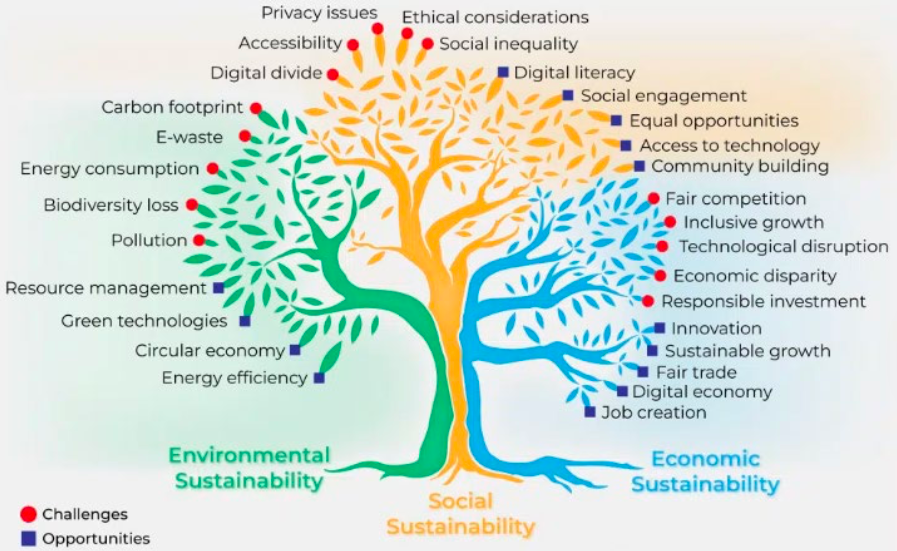
Sustainability Tree

  • Ecology / Environmental
    • Bio-diversity
    • Habitat loss
    • Pollution
    • Carbon footprint
  • Social - human side
    • Human trafficking
    • Working conditions
    • Child labour
    • Social cohesion
    • Addiction and psychological damages

Internal Perspectives

  • Economic - Business sustainability
    • Solvency
    • Regulations
    • Management
    • Succession planning
    • Disaster management
    • Short-term thinking / goals
    • Fiduciary obligations to Shareholders

TIM 002

· 약 3분

Market Structure

Perfect CompetitionMonopolistic CompetitionOligopolyMonopoly
Number of firmsAlmost InfiniteManyFewOne
Barriers to EntryNo barriersNo barriers / Low barriersSome barriersHigh barriers
Influence over PricePrice TakerLimitedSomePrice Maker
Nature of ProductHomogeneousDifferentiatedSimilar, DifferentiatedNo close substitutes
ExamplesCommon agricultural productsFast-food restaurantsAuto IndustryUtilities

Porter's 5 Competitive Forces

  1. Threat of New Entrants: Profitable industries that yield high returns will attract new firms. New entrants eventually will decrease profitability for other firms in the industry.
  2. Threat of Substitutes: A substitute product uses a different technology to try to solve the same economic need.
  3. Bargaining Power of Customers: The market outputs. The ability of customers to put the firm under pressure, which also affects the customer's sensitivity to price changes.
  4. Bargaining Power of Suppliers: The market inputs. Suppliers of raw materials, components, labor, and services (such as expertise) to the firm can be a source of power over the firm when there are few substitutes.
  5. Competitive rivalry: For most industries the intensity of competitive rivalry is the major determinant of the competitiveness of the industry.

Threat of New Entrants

Barriers to entry ⬆️, Profits ⬆️

  • How difficult it is for new business to enter an industry and compete with already established ones.
  • Many competitors lead to lower average profits
  • Threat of New Entrants:
    • Barriers to entry
    • Economies of scale
    • Brand loyalty
    • Capital requirements
    • Cumultative experience
    • Government policies
    • Access to distribution channels
    • Switching costs

Threat of Substitute Products

  • A substitute product or service is an alternative that serves the same purpose for the customers, from a different industry.
  • For example,
    • Taxi vs. Uber
    • Train vs. Plane
    • Tea vs. Coffee vs. Soft Drinks
  • Threat of Substitutes Products:
    • Number of substitute products available
    • Buyer propensity ot substitute
    • Relative price performance of substitute
    • Perceived level of product differentiation
    • Switching costs

Bargaining Power of Customers and Suppliers

  • Bargaining power of customers:
    • Number of customers
    • Size of each customer order
    • Differences between competitors
    • Price sensitivity
    • Buyer's ability to substitute
    • Buyer's information availability
    • Switching costs
  • Bargaining power of suppliers:
    • Number of suppliers
    • Size of suppliers
    • Uniqueness of each supplier's product
    • Focal company's ability to substitute

Rivalry among Existing Competitors

  • The extent of competition within an industry
  • Price wars
  • Rivalry among existing competitors:
    • Number of competitors
    • Diversity of competitors
    • Industry concentration
    • Industry growth
    • Quality differences
    • Brand loyalty
    • Barriers to exit
    • Switching costs
  • For example,
    • Woolworths vs. Coles
    • Apple vs. Samsung

KANO Model

  • Expected (Basic or Must-be) Attribute: whose presence doesn't directly increase satisfaction, but their absence causes extreme dissatisfaction.
    • car: a functioning brake is a must be quality
    • hotel: providing a clean room is a basic necessity
  • One-Dimensional (Performance) Attribute: can both satisfy and dissatisfy customers depending on their execution.
    • car: acceleration
    • hotel: waiting service at a hotel
  • Attractive (Delight) Attribute: differentiate products and services, creating a "wow factor" and delighting customers when present, but causing no dissatisfaction when absent.
    • car: advanced parking sensor
    • hotel: providing free food
  • Indifferent Attribute
    • car: the color of the car
    • hotel: highly polite speacking and very prompt responses not be necessary to satisfy customers
  • Reverse Attribute
    • web: auto-playing videos/audio
    • venue: unnecessary security checks at the entrance of a venue

Possible movement of Attributes' place

  • As customer expectations change with the level or performance from competing products, attributes can move from delighter to performance need and then to basic need.

Innovation Tactics

· 약 9분

Profit Model

  • Ad-Supported: Provide content or services for free to one party while selling listneners, viewers, or "eyeballs" another party.
  • Auction: Allow a merket-and its users-to set the price for goods and services.
  • Bundled Pricing: Sell in a single transaction two or more items that could be sold as standalong offerings.
  • Cost Leadership: Keep variable costs low and sell high volumes at low prices.
  • Disaggregated Pricing: Allow customers to buy exactly-and only-what they want.
  • Financing: Capture revenue not from the direct sale of a product but from structured payment plans and after-sale interest.
  • Flexible Pricing: Vary prices for an offering based on demand.
  • Float: Receive payment prior to building the offering; earn interest on that money prior to delivering the goods.
  • Forced Scarcity: Limit the supply of offerings available, by quantity, time frame, or access, to drive up demand and/or prices.
  • Freemium: Offer basic services for free while charging a premium for advanced or special features.
  • Installed Base: Offer a "core" product for slime margins (or even a loss) to drive demand and loyalty; then realize profit on additional products and services.
  • Licensing: Grant permission to a group or individual to use your offering in a defined way for a specified payment.
  • Membership: Charge a time-based payment to allow access to locations, offerings, or services that non-members don't have.
  • Metered Use: Allow customeres to pay only for what they use.
  • Microtransactions: Sell many items for as little as a dollar-or even only one cent- to drive impulse purchases.
  • Premium: Price at a higher margin than competitors, usually for a superior product, offering, experience, service, or brand.
  • Risk Sharing: Waive standrad fees or costs if certain metrics aren't achieved, but receive outsize gains when they are.
  • Scaled Transactions: Maximize margins by pursuing high-volume, large-scale transactions when unit costs are relatively fixed.
  • Subscriptiuon: Create predictable cash flows by charging customers upfront (a one time or recurring fee) to have access to the product or service orver time.
  • Switchboard: Connect multiple sellers with multiple buyers. The more buyers and sellers who join, the more valuable the switchboard becomes.
  • User-Defined: Invite customers to set the prcie they wish to pay.

Network

  • Alliances: Share risks and revenues to jointly improve individual competitive advantage.
  • Collaboration: Partner with others for mutual benefit.
  • Complementary partnering: Leverage assets by sharing them with companies that serve similar markets but offer different products and services.
  • Consolidation: Acquire multiple companies in the same market or complementary markets.
  • Coopetition: Join forces with someone who would normally be your competitior to achieve a common goal.
  • Franchising: License business principles, processes, and brand to paying partners.
  • Merger/Acquisition: Combine two or more entities to gain accesss to capabilities and assets.
  • Open Innovation: Obtain access to processes or patents from other companies to leverage, extend, and build on expertise, and/or do the same with internal IP and processes.
  • Secondary Markets: Connect waste streams, by-products, or other alternative offerings with those who want them.
  • Supply Chain Integration: Coordinate and integrate information and/or processes across a company or different parts of the value chain.

Structure

  • Asset Standardization: Reduce operating costs and increase connectivity and modularity by standardizing your assets.
  • Competency Center: Cluster resources, practices, and expertise into centers that support functions across the organization to increase efficiency and effectiveness.
  • Corporate University: Provide job-specific or company-specific training for managers.
  • Decentralized Management: Devolve decision-making governance closer to the people or business interfaces.
  • Incentive Systems: Offer rewards (financial or non-financial) to provide motivatino for a particular course of action.
  • IT Integration: Integrate technology resources and applications.
  • Knowledge Management: Share releavant information internally to reduce redundancy and improve job performance.
  • Organizational Design: Make from follow function and align infrastructure with core qualities and business processes.
  • Outsourcing: Assign to a vendor responsibility for developing or maintaining a ssystem.

Process

  • Crowdsourcing: Outsource repetitive or challenging work to a large group of semi-organized individuals.
  • Flexible Manufacturing: Use a production system that can rapidly react to changes and still operate efficiently.
  • Flexible Manufacturing: Use a production system that can rapidly react to changes and still operate efficiently.
  • Intellectual Property: Use a proprietary process to commercialize ideas in ways that others cannot copy.
  • Lean Production: Reduce waste and cost in your manufacturing process and other operations.
  • Localization: Adapt an offering, process, or experience to target a specific culture or region.
  • Logistics Systems: Manage the flow of goods, information, and other resources between the point of origin and the point of use.
  • On-Demand Production: Produce items after an order has been received to avoid carrying costs of inventory.
  • Predictive Analytics: Model past performance data and predict future outcomes to design and price offerings accordingly.
  • Process Automation: Apply tools and infrastructure to manage routine activities in order to free up employees for other tasks.
  • Process Efficiency: Create or produce more while using less in terms of materials, energy consumption, or time.
  • Process Standardization: Use common products, procedures, and policies to reduce complexity, costs, and errors.
  • Strategic Design: Employ a purposeful approach that manifests itself consistently across offerings, brands, and experiences.
  • User-Generated: Put your users to work in creating and curating the content that powers your offerings.

Product Performance

  • Added Functionality: Add new capabilities to an existing offering.
  • Conservation: Design your product so that end users can reduce their use of energy or materials.
  • Customization: Enable altering to suit individual requirements or specifications.
  • Ease of Use: Make your product simple, intuitive, and comfortable to use.
  • Engaging Functionality: Provide an unexpected or newsworthy feature that elevates the customer interaction from the ordinary.
  • Environmental Sensitivity: Create offerings that do no harm—or relatively less harm—to the environment.
  • Feature Aggregation: Combine a number of existing features from disparate sources into a single offering.
  • Focus: Design a product or service for a particular audience.
  • Performance Simplification: Omit superfluous details, features, and interactions to reduce complexity.
  • Safety: Increase the customer’s level of confidence and security.
  • Styling: Impart a noteworthy style, fashion, or image to create a product that customers covet.
  • Superior Product: Develop an offering of exceptional design, quality, and/or experience.

Product System

  • Complements: Sell additional related or peripheral products or services to a customer.
  • Extensions/Plug-ins: Allow additions from internal or third-party resources that add functionality.
  • Integrated Offering: Combine otherwise discrete components into a complete experience.
  • Modular Systems: Provide a set of individual components that can be used independently, but gain utility when combined.
  • Product Bundling: Put together several products for sale as one combined offering.
  • Product/Service Platforms: Develop systems that connect with other partner products and services to create a holistic offering.

Service

  • Added Value: Include an additional service or function as part of the base price.
  • Concierge: Provide premium service by taking on tasks for which customers don’t have time.
  • Guarantee: Remove customer risk of lost money or time from product failure or purchase error.
  • Lease or Loan: Let customers pay over time to lower their upfront costs.
  • Loyalty Programs: Provide benefits and/or discounts to frequent and high-value customers.
  • Personalized Service: Use the customer’s own information to provide perfectly calibrated service.
  • Self-Service: Provide users with control over activities that would otherwise require an intermediary to complete.
  • Superior Service: Provide service(s) of higher quality, efficacy, or which offer(s) a better experience than any competitor.
  • Supplementary Service: Offer ancillary services that fit with your offering.
  • Total Experience Management: Provide thoughtful, holistic management of the consumer experience across an offering’s lifecycle.
  • Try Before You Buy: Let customers test and experience an offering before investing in it.
  • User Communities/Support Systems: Provide a communal resource for product and service support, use, and extension.

Channel

  • Context-Specific: Offer timely access to offerings that are appropriate for a specific location, occasion, or situation.
  • Cross-Selling: Offer appealing additional products, services, or information that will enhance an experience in situations where customers are likely to want to buy them.
  • Diversification: Add and expand into new or different channels.
  • Experience Center: Create space that encourages your customers to interact with your offerings—but purchase them through a different (and often lower cost) channel.
  • Flagship Store: Create a retail outlet to showcase quintessential brand and product attributes.
  • Go Direct: Skip traditional retail channels and connect directly with customers.
  • Indirect Distribution: Use others as resellers who take responsibility for delivering an offering to the final user.
  • Multi-Level Marketing: Sell bulk or packaged goods to an affiliated but independent sales force that turns around and sells it for you.
  • Non-Traditional Channels: Employ novel and relevant avenues to reach and service customers.
  • On-Demand: Deliver goods in real-time whenever or wherever they are desired.
  • Pop-Up Presence: Create a noteworthy but temporary environment to showcase and/or sell offerings.

Brand

  • Brand Extension: Offer a new product or service under the umbrella of an existing brand.
  • Brand Leverage: Allow others to use your brand name to lend them your credibility and extend your company’s reach.
  • Certification: Develop a brand or mark that signifies and ensures certain desirable characteristics in third-party offerings.
  • Co-Branding: Combine brands to mutually reinforce key attributes or enhance the credibility of an offering.
  • Component Branding: Brand a discrete piece of the offering to make the whole appear more valuable.
  • Private Label: Provide goods made by others packaged under your company’s brand.
  • Transparency: Let customers see into your operations and participate with your brand and offerings.
  • Values Alignment: Make your brand stand for a big idea or a set of values and express them consistently in all aspects of your company.

Customer Engagement

  • Autonomy and Authority: Grant users the power to shape their own experience.
  • Community and Belonging: Facilitate visceral connections to make people feel they are part of a group or movement.
  • Curation: Create a distinct point of view to build a strong identity for yourself and give your followers exactly what they want.
  • Experience Automation: Remove the burden of repetitive tasks from users to simplify their lives and make new experiences seem magical.
  • Experience Enabling: Extend the realm of what’s possible to offer a previously improbable experience.
  • Experience Simplification: Reduce complexity and focus on delivering specific experiences exceptionally well.
  • Mastery: Help customers to obtain great skill or deep knowledge of some activity or subject.
  • Personalization: Alter a standard offering to allow the projection of the customer’s identity.
  • Status and Recognition: Offer cues that confer meaning, allowing users—and those who interact with them—to develop and nurture aspects of their identity.
  • Whimsy and Personality: Humanize your offering with small flourishes of on-brand, on-message ways of seeming alive.

Reference

  • Keeley, L., Walters, H., Pikkel, R., & Quinn, B. (2013). Ten Types of Innovation: The Discipline of Building Breakthroughs. John Wiley & Sons, Incorporated.