본문으로 건너뛰기

Full Stack JavaScript Developer | Half-time Open Sourcerer.

모든 저자 보기

Free up storage space on mac

· 약 1분

Issue

  • Mac storage setting didn't show the actual storage usage, and it was always showing "Other" taking up a lot of space.
  • It also didn't check cache files, which took up at least 10GiB of space.

CLI

GUI

  • OmniDiskSweeper
  • Click "Macintosh HD" and "Sweep Macintosh HD Drive..."
  • You can manually select the files to delete including cache files.

IQC 002

· 약 7분

Ket

ψ=(ψ0ψ1)|\psi\rangle = \begin{pmatrix} \psi_0 \\ \psi_1 \end{pmatrix}

0=(10)|0\rangle = \begin{pmatrix} 1 \\ 0 \end{pmatrix}

1=(01)|1\rangle = \begin{pmatrix} 0 \\ 1 \end{pmatrix}

ψ=ψ00+ψ11=ψ0(10)+ψ1(01)|\psi\rangle = \psi_0 |0\rangle + \psi_1 |1\rangle \\ \quad = \psi_0 \begin{pmatrix} 1 \\ 0 \end{pmatrix} + \psi_1 \begin{pmatrix} 0 \\ 1 \end{pmatrix}

Matrices

  • Matrices represent linear transformations (quantum gates). A general 2x2 matrix is: A=(α00α01α10α11)A = \begin{pmatrix} \alpha_{00} & \alpha_{01} \\ \alpha_{10} & \alpha_{11} \end{pmatrix}
  • Identity matrix: I=(1001)I = \begin{pmatrix} 1 & 0 \\ 0 & 1 \end{pmatrix}
  • Linearity: A(ψ+ϕ)=Aψ+AϕA(|\psi\rangle + |\phi\rangle) = A|\psi\rangle + A|\phi\rangle

Bra and Daggers

Dagger

  • Conjugate Transpose: swap rows/columns and complex-conjugates every entry.
  • Ket becomes Bra: ψ=(ψ0ψ1)=(ψ0ψ1)=ψ|\psi\rangle^\dagger = \begin{pmatrix} \psi_0 \\ \psi_1 \end{pmatrix}^\dagger = \begin{pmatrix} \overline{\psi_0} & \overline{\psi_1} \end{pmatrix} = \langle\psi|
  • For a matrix: A=(α00α10α01α11)A^\dagger = \begin{pmatrix} \overline{\alpha_{00}} & \overline{\alpha_{10}} \\ \overline{\alpha_{01}} & \overline{\alpha_{11}} \end{pmatrix}
  • Key Identities:
    • (αA)=αA(\alpha A)^\dagger = \overline{\alpha} A^\dagger
    • (A)=A(A^\dagger)^\dagger = A
    • (AB)=BA(AB)^\dagger = B^\dagger A^\dagger

Hermitian and Unitary Matrices

  • Hermitian: H=HH^\dagger = H
    • Self-adjoint matrices, their eigenvalues are always real.
    • Observables in quantum mechanics are Hermitian.
  • Unitary: UU=UU=IU^\dagger U = UU^\dagger = I
    • The inverse of a unitary matrix is its conjugate transpose.
    • Unitary matrices preserve norms

Inner Product

  • The angle between two vectors ψ|\psi\rangle and ϕ|\phi\rangle is defined as bra-ket: ψϕ=(ψ0ψ1)(ϕ0ϕ1)=ψ0ϕ0+ψ1ϕ1\langle\psi|\phi\rangle = (\overline{\psi_0} \overline{\psi_1}) \begin{pmatrix} \phi_0 \\ \phi_1 \end{pmatrix} = \overline{\psi_0}\phi_0 + \overline{\psi_1}\phi_1
  • Important properties:
    • Order Matters: ψϕϕψ\langle\psi|\phi\rangle \neq \langle\phi|\psi\rangle
    • But ψϕ=ϕψ\langle\psi|\phi\rangle = \overline{\langle\phi|\psi\rangle} (Complex Conjugate)
    • The modulus is symmetric: ψϕ=ϕψ|\langle\psi|\phi\rangle| = |\langle\phi|\psi\rangle|
  • The Magnitude of a vector is given by: ψ2=ψψ=ψ02+ψ12\| |\psi\rangle \|^2 = \langle\psi|\psi\rangle = |\psi_0|^2 + |\psi_1|^2

Orthonormal of the Computational Basis

  • The basis states 0|0\rangle and 1|1\rangle are orthonormal: 00=1,11=1,01=0,10=0\langle 0|0\rangle = 1, \quad \langle 1|1\rangle = 1, \quad \langle 0|1\rangle = 0, \quad \langle 1|0\rangle = 0
  • This simplifies inner products enormously when working with the computational basis: ψϕ=(ψ00+ψ11)(ϕ00+ϕ11) \langle\psi|\phi\rangle = (\overline{\psi_0}\langle0| + \overline{\psi_1}\langle1|) (\phi_0|0\rangle + \phi_1|1\rangle)
  • All corss terms vanish due to orthogonality, leaving: =ψ0ϕ000+ψ0ϕ101+ψ1ϕ010+ψ1ϕ111 = \overline{\psi_0}\phi_0 \langle0|0\rangle + \overline{\psi_0}\phi_1 \langle0|1\rangle + \overline{\psi_1}\phi_0 \langle1|0\rangle + \overline{\psi_1}\phi_1 \langle1|1\rangle =ψ0ϕ0+ψ1ϕ1= \overline{\psi_0}\phi_0 + \overline{\psi_1}\phi_1

Outer Products

  • The outer product of two vectors produces a matrix: ψϕ=(ψ0ψ1)(ϕ0ϕ1)=(ψ0ϕ0ψ0ϕ1ψ1ϕ0ψ1ϕ1)|\psi\rangle\langle\phi| = \begin{pmatrix} \psi_0 \\ \psi_1 \end{pmatrix} \begin{pmatrix} \overline{\phi_0} & \overline{\phi_1} \end{pmatrix} = \begin{pmatrix} \psi_0\overline{\phi_0} & \psi_0\overline{\phi_1} \\ \psi_1\overline{\phi_0} & \psi_1\overline{\phi_1} \end{pmatrix}
  • Basis outer products: 01=(0100),10=(0010)|0\rangle\langle1| = \begin{pmatrix} 0 & 1 \\ 0 & 0 \end{pmatrix}, \quad |1\rangle\langle0| = \begin{pmatrix} 0 & 0 \\ 1 & 0 \end{pmatrix}
  • Any matrix can be expanded in terms of outer products of the computational basis: A=α0000+α0101+α1010+α1111A = \alpha_{00} |0\rangle\langle0| + \alpha_{01} |0\rangle\langle1| + \alpha_{10} |1\rangle\langle0| + \alpha_{11} |1\rangle\langle1|

The Qubit

A qubit is the fundamental unit of quantum information

ψ=α0+β1|\psi\rangle = \alpha |0\rangle + \beta |1\rangle

  • where α,βC\alpha, \beta \in \mathbb{C} are complex numbers such that α2+β2=1|\alpha|^2 + |\beta|^2 = 1 (normalization condition).
  • Any normalized single-qubit state can be parameterized using two angles θ\theta and ϕ\phi (real numbers): ψ=cosθ0+eiϕsinθ1|\psi\rangle = \cos\theta|0\rangle + e^{i\phi}\sin\theta|1\rangle
  • Key difference from a bit: a bit is either 0 or 1, while a qubit can be in a superposition of both states simultaneously until measured.

Measurement

  • When you measure a qubit ψ=α0+β1|\psi\rangle = \alpha |0\rangle + \beta |1\rangle in the computational basis, you get:
    • 0|0\rangle with probability α2|\alpha|^2
    • 1|1\rangle with probability β2|\beta|^2
OutcomeProbabilityPost-measurement State
0$\alpha
1$\beta
  • The result of measuring a qubit is a single classical bit.
  • For ψ=cosθ0+eiϕsinθ1|\psi\rangle = \cos\theta|0\rangle + e^{i\phi}\sin\theta|1\rangle:
    • Probability of measuring 0|0\rangle: cos2θ\cos^2\theta
    • Probability of measuring 1|1\rangle: sin2θ\sin^2\theta
    • The phase ϕ\phi does not affect measurement outcomes.

One-Qubit Gates

Pauli Matrices

Unitary matrics

I=(1001),X=(0110),Y=(0ii0),Z=(1001)\mathbb{I} = \begin{pmatrix} 1 & 0 \\ 0 & 1 \end{pmatrix}, \quad X = \begin{pmatrix} 0 & 1 \\ 1 & 0 \end{pmatrix}, \quad Y = \begin{pmatrix} 0 & -i \\ i & 0 \end{pmatrix}, \quad Z = \begin{pmatrix} 1 & 0 \\ 0 & -1 \end{pmatrix}

  • XX is the quantum NOT gate:
    • X0=1X|0\rangle = |1\rangle
    • X1=0X|1\rangle = |0\rangle
  • ZZ filps the phase of 1|1\rangle:
    • Z0=0Z|0\rangle = |0\rangle
    • Z1=1Z|1\rangle = -|1\rangle
  • All three (X,Y,Z)(X, Y, Z) are both Hermitian and unitary.

Hadamard Gate

H=12(1111)H = \frac{1}{\sqrt{2}} \begin{pmatrix} 1 & 1 \\ 1 & -1 \end{pmatrix}

  • HH creates superpositions:
    • H0=0+12H|0\rangle = \frac{|0\rangle + |1\rangle}{\sqrt{2}}
    • H1=012H|1\rangle = \frac{|0\rangle - |1\rangle}{\sqrt{2}}
  • HH also "un-does" superpositions:
    • H(0+12)=0H\left(\frac{|0\rangle + |1\rangle}{\sqrt{2}}\right) = |0\rangle
    • H(012)=1H\left(\frac{|0\rangle - |1\rangle}{\sqrt{2}}\right) = |1\rangle

Rotation Gate

R(θ)=(cosθsinθsinθcosθ)R(\theta) = \begin{pmatrix} \cos\theta & \sin\theta \\ -\sin\theta & \cos\theta \end{pmatrix}

  • R(θ)R(\theta) rotates the state vector by an angle θ\theta in the 0|0\rangle-1|1\rangle plane.

The Bloch Sphere

Every single-qubit state ψ=cosθ0+eiϕsinθ1|\psi\rangle = \cos\theta|0\rangle + e^{i\phi}\sin\theta|1\rangle maps to a point on the surface of a unit sphere

  • θ\theta is polar angle from north pole
  • ϕ\phi is azimuthal angle around equator
  • 0|0\rangle is at the north pole
  • 1|1\rangle is at the south pole
  • 0+12\frac{|0\rangle + |1\rangle}{\sqrt{2}} is on the equator at ϕ=0\phi=0

Exercises

  1. For any two-dimensional state vector ψ=α0+β1|\psi\rangle = \alpha |0\rangle + \beta |1\rangle, it holds that α2+β2=1|\alpha|^2 + |\beta|^2 = 1.
  2. Measuring a qubit in the {0,1}\{|0\rangle, |1\rangle\} basis yields a probabilistic outcome when both α\alpha and β\beta are non-zero.
  3. A global phase factor eiγe^{i\gamma} applied to a qubit state does not change the probabilities of measurement outcomes in the computational basis.
  4. The Bloch sphere represents all pure single-qubit states as points on the surface of the sphere.
  5. A real 2×22 \times 2 matrix is a valid quantum gate only if it is unitary, not merely invertible.
  6. The Pauli-X gate flips 0|0\rangle to 1|1\rangle and 1|1\rangle to 0|0\rangle.
  7. When a qubit is measured in a given basis, the state collapses to the basis state corresponding to the measurement outcome.
  8. Unitary matrices preserve the norm of any vector they act on.
  9. If ψ=cos(θ)0+eiϕsin(θ)1|\psi\rangle = \cos(\theta)|0\rangle + e^{i\phi}\sin(\theta)|1\rangle, then the probability of measuring 0|0\rangle is cos2(θ)\cos^2(\theta).
  10. The state 120+321\frac{1}{2}|0\rangle + \frac{\sqrt{3}}{2}|1\rangle is properly normalized.
  11. If ψ=130+23eiπ/41|\psi\rangle = \frac{1}{\sqrt{3}}|0\rangle + \sqrt{\frac{2}{3}} e^{i\pi/4}|1\rangle, then the probability of measuring 0|0\rangle is 13\frac{1}{3}.
  12. The states 12(0+1)\frac{1}{\sqrt{2}}(|0\rangle + |1\rangle) and 12(01)\frac{1}{\sqrt{2}}(|0\rangle - |1\rangle) are orthogonal.
  13. The Pauli-X matrix X=(0110)X = \begin{pmatrix}0 & 1 \\ 1 & 0\end{pmatrix} satisfies X2=IX^2 = I, where II is the 2×22 \times 2 identity matrix.
  14. Applying the Pauli-Z gate Z=(1001)Z = \begin{pmatrix}1 & 0 \\ 0 & -1\end{pmatrix} to 12(0+i1)\frac{1}{\sqrt{2}}(|0\rangle + i|1\rangle) produces 12(0i1)\frac{1}{\sqrt{2}}(|0\rangle - i|1\rangle).

TIM 002

· 약 3분

Market Structure

Perfect CompetitionMonopolistic CompetitionOligopolyMonopoly
Number of firmsAlmost InfiniteManyFewOne
Barriers to EntryNo barriersNo barriers / Low barriersSome barriersHigh barriers
Influence over PricePrice TakerLimitedSomePrice Maker
Nature of ProductHomogeneousDifferentiatedSimilar, DifferentiatedNo close substitutes
ExamplesCommon agricultural productsFast-food restaurantsAuto IndustryUtilities

Porter's 5 Competitive Forces

  1. Threat of New Entrants: Profitable industries that yield high returns will attract new firms. New entrants eventually will decrease profitability for other firms in the industry.
  2. Threat of Substitutes: A substitute product uses a different technology to try to solve the same economic need.
  3. Bargaining Power of Customers: The market outputs. The ability of customers to put the firm under pressure, which also affects the customer's sensitivity to price changes.
  4. Bargaining Power of Suppliers: The market inputs. Suppliers of raw materials, components, labor, and services (such as expertise) to the firm can be a source of power over the firm when there are few substitutes.
  5. Competitive rivalry: For most industries the intensity of competitive rivalry is the major determinant of the competitiveness of the industry.

Threat of New Entrants

Barriers to entry ⬆️, Profits ⬆️

  • How difficult it is for new business to enter an industry and compete with already established ones.
  • Many competitors lead to lower average profits
  • Threat of New Entrants:
    • Barriers to entry
    • Economies of scale
    • Brand loyalty
    • Capital requirements
    • Cumultative experience
    • Government policies
    • Access to distribution channels
    • Switching costs

Threat of Substitute Products

  • A substitute product or service is an alternative that serves the same purpose for the customers, from a different industry.
  • For example,
    • Taxi vs. Uber
    • Train vs. Plane
    • Tea vs. Coffee vs. Soft Drinks
  • Threat of Substitutes Products:
    • Number of substitute products available
    • Buyer propensity ot substitute
    • Relative price performance of substitute
    • Perceived level of product differentiation
    • Switching costs

Bargaining Power of Customers and Suppliers

  • Bargaining power of customers:
    • Number of customers
    • Size of each customer order
    • Differences between competitors
    • Price sensitivity
    • Buyer's ability to substitute
    • Buyer's information availability
    • Switching costs
  • Bargaining power of suppliers:
    • Number of suppliers
    • Size of suppliers
    • Uniqueness of each supplier's product
    • Focal company's ability to substitute

Rivalry among Existing Competitors

  • The extent of competition within an industry
  • Price wars
  • Rivalry among existing competitors:
    • Number of competitors
    • Diversity of competitors
    • Industry concentration
    • Industry growth
    • Quality differences
    • Brand loyalty
    • Barriers to exit
    • Switching costs
  • For example,
    • Woolworths vs. Coles
    • Apple vs. Samsung

KANO Model

  • Expected (Basic or Must-be) Attribute: whose presence doesn't directly increase satisfaction, but their absence causes extreme dissatisfaction.
    • car: a functioning brake is a must be quality
    • hotel: providing a clean room is a basic necessity
  • One-Dimensional (Performance) Attribute: can both satisfy and dissatisfy customers depending on their execution.
    • car: acceleration
    • hotel: waiting service at a hotel
  • Attractive (Delight) Attribute: differentiate products and services, creating a "wow factor" and delighting customers when present, but causing no dissatisfaction when absent.
    • car: advanced parking sensor
    • hotel: providing free food
  • Indifferent Attribute
    • car: the color of the car
    • hotel: highly polite speacking and very prompt responses not be necessary to satisfy customers
  • Reverse Attribute
    • web: auto-playing videos/audio
    • venue: unnecessary security checks at the entrance of a venue

Possible movement of Attributes' place

  • As customer expectations change with the level or performance from competing products, attributes can move from delighter to performance need and then to basic need.

Innovation Tactics

· 약 9분

Profit Model

  • Ad-Supported: Provide content or services for free to one party while selling listneners, viewers, or "eyeballs" another party.
  • Auction: Allow a merket-and its users-to set the price for goods and services.
  • Bundled Pricing: Sell in a single transaction two or more items that could be sold as standalong offerings.
  • Cost Leadership: Keep variable costs low and sell high volumes at low prices.
  • Disaggregated Pricing: Allow customers to buy exactly-and only-what they want.
  • Financing: Capture revenue not from the direct sale of a product but from structured payment plans and after-sale interest.
  • Flexible Pricing: Vary prices for an offering based on demand.
  • Float: Receive payment prior to building the offering; earn interest on that money prior to delivering the goods.
  • Forced Scarcity: Limit the supply of offerings available, by quantity, time frame, or access, to drive up demand and/or prices.
  • Freemium: Offer basic services for free while charging a premium for advanced or special features.
  • Installed Base: Offer a "core" product for slime margins (or even a loss) to drive demand and loyalty; then realize profit on additional products and services.
  • Licensing: Grant permission to a group or individual to use your offering in a defined way for a specified payment.
  • Membership: Charge a time-based payment to allow access to locations, offerings, or services that non-members don't have.
  • Metered Use: Allow customeres to pay only for what they use.
  • Microtransactions: Sell many items for as little as a dollar-or even only one cent- to drive impulse purchases.
  • Premium: Price at a higher margin than competitors, usually for a superior product, offering, experience, service, or brand.
  • Risk Sharing: Waive standrad fees or costs if certain metrics aren't achieved, but receive outsize gains when they are.
  • Scaled Transactions: Maximize margins by pursuing high-volume, large-scale transactions when unit costs are relatively fixed.
  • Subscriptiuon: Create predictable cash flows by charging customers upfront (a one time or recurring fee) to have access to the product or service orver time.
  • Switchboard: Connect multiple sellers with multiple buyers. The more buyers and sellers who join, the more valuable the switchboard becomes.
  • User-Defined: Invite customers to set the prcie they wish to pay.

Network

  • Alliances: Share risks and revenues to jointly improve individual competitive advantage.
  • Collaboration: Partner with others for mutual benefit.
  • Complementary partnering: Leverage assets by sharing them with companies that serve similar markets but offer different products and services.
  • Consolidation: Acquire multiple companies in the same market or complementary markets.
  • Coopetition: Join forces with someone who would normally be your competitior to achieve a common goal.
  • Franchising: License business principles, processes, and brand to paying partners.
  • Merger/Acquisition: Combine two or more entities to gain accesss to capabilities and assets.
  • Open Innovation: Obtain access to processes or patents from other companies to leverage, extend, and build on expertise, and/or do the same with internal IP and processes.
  • Secondary Markets: Connect waste streams, by-products, or other alternative offerings with those who want them.
  • Supply Chain Integration: Coordinate and integrate information and/or processes across a company or different parts of the value chain.

Structure

  • Asset Standardization: Reduce operating costs and increase connectivity and modularity by standardizing your assets.
  • Competency Center: Cluster resources, practices, and expertise into centers that support functions across the organization to increase efficiency and effectiveness.
  • Corporate University: Provide job-specific or company-specific training for managers.
  • Decentralized Management: Devolve decision-making governance closer to the people or business interfaces.
  • Incentive Systems: Offer rewards (financial or non-financial) to provide motivatino for a particular course of action.
  • IT Integration: Integrate technology resources and applications.
  • Knowledge Management: Share releavant information internally to reduce redundancy and improve job performance.
  • Organizational Design: Make from follow function and align infrastructure with core qualities and business processes.
  • Outsourcing: Assign to a vendor responsibility for developing or maintaining a ssystem.

Process

  • Crowdsourcing: Outsource repetitive or challenging work to a large group of semi-organized individuals.
  • Flexible Manufacturing: Use a production system that can rapidly react to changes and still operate efficiently.
  • Flexible Manufacturing: Use a production system that can rapidly react to changes and still operate efficiently.
  • Intellectual Property: Use a proprietary process to commercialize ideas in ways that others cannot copy.
  • Lean Production: Reduce waste and cost in your manufacturing process and other operations.
  • Localization: Adapt an offering, process, or experience to target a specific culture or region.
  • Logistics Systems: Manage the flow of goods, information, and other resources between the point of origin and the point of use.
  • On-Demand Production: Produce items after an order has been received to avoid carrying costs of inventory.
  • Predictive Analytics: Model past performance data and predict future outcomes to design and price offerings accordingly.
  • Process Automation: Apply tools and infrastructure to manage routine activities in order to free up employees for other tasks.
  • Process Efficiency: Create or produce more while using less in terms of materials, energy consumption, or time.
  • Process Standardization: Use common products, procedures, and policies to reduce complexity, costs, and errors.
  • Strategic Design: Employ a purposeful approach that manifests itself consistently across offerings, brands, and experiences.
  • User-Generated: Put your users to work in creating and curating the content that powers your offerings.

Product Performance

  • Added Functionality: Add new capabilities to an existing offering.
  • Conservation: Design your product so that end users can reduce their use of energy or materials.
  • Customization: Enable altering to suit individual requirements or specifications.
  • Ease of Use: Make your product simple, intuitive, and comfortable to use.
  • Engaging Functionality: Provide an unexpected or newsworthy feature that elevates the customer interaction from the ordinary.
  • Environmental Sensitivity: Create offerings that do no harm—or relatively less harm—to the environment.
  • Feature Aggregation: Combine a number of existing features from disparate sources into a single offering.
  • Focus: Design a product or service for a particular audience.
  • Performance Simplification: Omit superfluous details, features, and interactions to reduce complexity.
  • Safety: Increase the customer’s level of confidence and security.
  • Styling: Impart a noteworthy style, fashion, or image to create a product that customers covet.
  • Superior Product: Develop an offering of exceptional design, quality, and/or experience.

Product System

  • Complements: Sell additional related or peripheral products or services to a customer.
  • Extensions/Plug-ins: Allow additions from internal or third-party resources that add functionality.
  • Integrated Offering: Combine otherwise discrete components into a complete experience.
  • Modular Systems: Provide a set of individual components that can be used independently, but gain utility when combined.
  • Product Bundling: Put together several products for sale as one combined offering.
  • Product/Service Platforms: Develop systems that connect with other partner products and services to create a holistic offering.

Service

  • Added Value: Include an additional service or function as part of the base price.
  • Concierge: Provide premium service by taking on tasks for which customers don’t have time.
  • Guarantee: Remove customer risk of lost money or time from product failure or purchase error.
  • Lease or Loan: Let customers pay over time to lower their upfront costs.
  • Loyalty Programs: Provide benefits and/or discounts to frequent and high-value customers.
  • Personalized Service: Use the customer’s own information to provide perfectly calibrated service.
  • Self-Service: Provide users with control over activities that would otherwise require an intermediary to complete.
  • Superior Service: Provide service(s) of higher quality, efficacy, or which offer(s) a better experience than any competitor.
  • Supplementary Service: Offer ancillary services that fit with your offering.
  • Total Experience Management: Provide thoughtful, holistic management of the consumer experience across an offering’s lifecycle.
  • Try Before You Buy: Let customers test and experience an offering before investing in it.
  • User Communities/Support Systems: Provide a communal resource for product and service support, use, and extension.

Channel

  • Context-Specific: Offer timely access to offerings that are appropriate for a specific location, occasion, or situation.
  • Cross-Selling: Offer appealing additional products, services, or information that will enhance an experience in situations where customers are likely to want to buy them.
  • Diversification: Add and expand into new or different channels.
  • Experience Center: Create space that encourages your customers to interact with your offerings—but purchase them through a different (and often lower cost) channel.
  • Flagship Store: Create a retail outlet to showcase quintessential brand and product attributes.
  • Go Direct: Skip traditional retail channels and connect directly with customers.
  • Indirect Distribution: Use others as resellers who take responsibility for delivering an offering to the final user.
  • Multi-Level Marketing: Sell bulk or packaged goods to an affiliated but independent sales force that turns around and sells it for you.
  • Non-Traditional Channels: Employ novel and relevant avenues to reach and service customers.
  • On-Demand: Deliver goods in real-time whenever or wherever they are desired.
  • Pop-Up Presence: Create a noteworthy but temporary environment to showcase and/or sell offerings.

Brand

  • Brand Extension: Offer a new product or service under the umbrella of an existing brand.
  • Brand Leverage: Allow others to use your brand name to lend them your credibility and extend your company’s reach.
  • Certification: Develop a brand or mark that signifies and ensures certain desirable characteristics in third-party offerings.
  • Co-Branding: Combine brands to mutually reinforce key attributes or enhance the credibility of an offering.
  • Component Branding: Brand a discrete piece of the offering to make the whole appear more valuable.
  • Private Label: Provide goods made by others packaged under your company’s brand.
  • Transparency: Let customers see into your operations and participate with your brand and offerings.
  • Values Alignment: Make your brand stand for a big idea or a set of values and express them consistently in all aspects of your company.

Customer Engagement

  • Autonomy and Authority: Grant users the power to shape their own experience.
  • Community and Belonging: Facilitate visceral connections to make people feel they are part of a group or movement.
  • Curation: Create a distinct point of view to build a strong identity for yourself and give your followers exactly what they want.
  • Experience Automation: Remove the burden of repetitive tasks from users to simplify their lives and make new experiences seem magical.
  • Experience Enabling: Extend the realm of what’s possible to offer a previously improbable experience.
  • Experience Simplification: Reduce complexity and focus on delivering specific experiences exceptionally well.
  • Mastery: Help customers to obtain great skill or deep knowledge of some activity or subject.
  • Personalization: Alter a standard offering to allow the projection of the customer’s identity.
  • Status and Recognition: Offer cues that confer meaning, allowing users—and those who interact with them—to develop and nurture aspects of their identity.
  • Whimsy and Personality: Humanize your offering with small flourishes of on-brand, on-message ways of seeming alive.

Reference

  • Keeley, L., Walters, H., Pikkel, R., & Quinn, B. (2013). Ten Types of Innovation: The Discipline of Building Breakthroughs. John Wiley & Sons, Incorporated.

Agentic SDLC

· 약 1분

Agentic SDLC

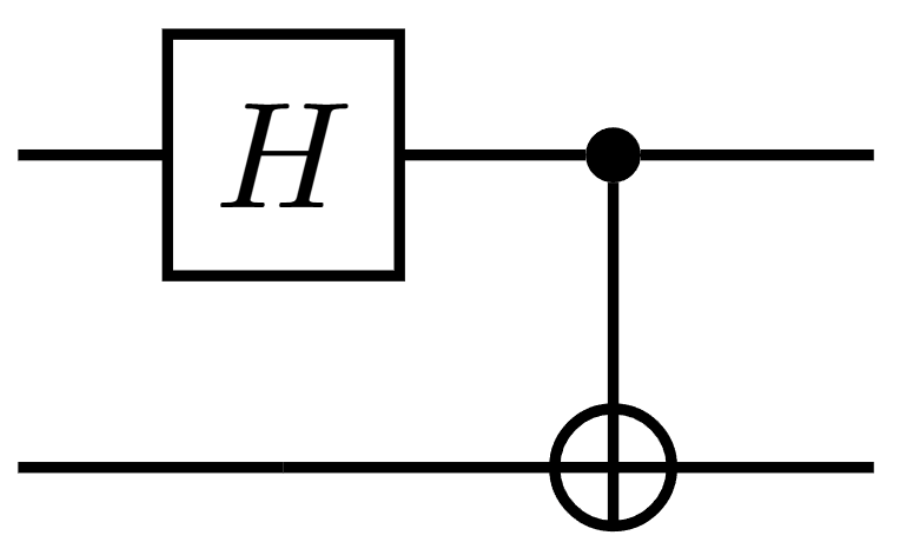
  • Agentic Software Development Life Cycle (SDLC) is an approach that integrates autonomous agents into the software development process.
  • This method decreases human intervention by allowing AI agents to handle various stages of development, from requirements gathering to deployment and maintainance.
  • It reduces the cycle time for SW development. Traditional SDLC takes weeks-to-months, while Agentic SDLC can potentially reduce this to days or even hours.

Cycles

Key differences

AspectTraditional SDLCAgentic SDLC
Cycle TimeWeeks to MonthsDays to Hours
FlowLinear, SequentialFluid, Iterative
Human InvolvementHuman codes everythingHuman guides, agent executes
DocumentationDocs as afterthoughtAuto-generated inline docs
TestingManual testingAutomated agent testing
Incident ResponseManual Incident handlingAgent-assisted remediation

Ref

로컬 도커 환경 툴 비교

· 약 2분

비교

옵션지원 OS기업 내 사용(유/무료)라이선스/유형런타임/구조K8S
Docker DesktopmacOS/Windows/Linux조건부, 그 외 유료상용Desktop 앱 + 백엔드/가상화(Windows는 WSL2 등)O
Podman DesktopmacOS/Windows/Linux무료(상업적 사용 포함)OSS (Apache-2.0)Podman + (mac/win) VM(podman machine)O
ColimamacOS/Linux무료(상업적 사용 포함)OSS (MIT)Lima 기반 VM + docker/containerd 선택O
OrbStackmacOS 전용개인만 무료, 기업/상업은 유료상용경량 VM 기반(통합/성능 강조)O
  • Docker Desktop
    • 기업 내 유/무료 판단 기준(공식)
      • 무료: 개인용, 교육용, 비상업 오픈소스, 소규모 사업자(직원 250명 미만 AND 연매출 1,000만 달러 미만).
      • 유료 구독 필요: 위 조건을 넘는 조직의 업무/상업적 사용, 정부기관 사용은 유료 필요.
    • 강점
      • 크로스플랫폼 표준화
    • 리스크
      • 조직 규모/매출에 따라 라이선스 비용 리스크가 명확.
  • Podman Desktop
    • 기업 내 유/무료
      • Apache-2.0 오픈소스라 상업적 사용 포함 무료.
    • 특징
      • Podman(daemonless/rootless 지향) 기반.
    • 트레이드오프
      • macOS/Windows에서는 보통 podman machine(VM)을 사용하게 되어 네트워킹/볼륨/호환성 체감이 환경별로 달라질 수 있음.
  • Colima
    • 기업 내 유/무료
      • MIT 라이선스(오픈소스)로 상업적 사용 포함 무료.
    • 특징
      • macOS/Linux에서 가볍게 컨테이너 런타임을 돌리는 CLI 중심(기본은 Lima VM).
    • K8s
      • 옵션으로 활성화 가능(프로젝트 기능으로 제공).
  • OrbStack
    • 기업 내 유/무료(공식)
      • Free = 개인/비상업만.
      • Pro(유료) = 비즈니스/상업적 사용(가격 페이지에 $8/user/month, 연간 청구로 표기).
      • 설치 시 30일 Pro 트라이얼(상업적 사용 가능) 후 Free로 내려감.
    • 강점
      • macOS에서 성능/통합 강점, 간단한 UI
    • 리스크
      • macOS 전용 + 상용/폐쇄형 + 업무용은 유료.

결론

  • 맥유저 개인이면 OrbStack이 성능/통합 측면에서 매력적. (메모리 적게 먹음, UI 지원)
  • 기업/조직에선 Podman Desktop
  • CLI 선호, 가벼운 도커 환경 원하면 Colima

Phrasal Verbs 01

· 약 24분

전화

Term/ExpressionDefinitionSimpler ParaphraseMeaning
Pickup the phoneTo answer a phone callanswer the phone전화를 받다
Get on the phoneTo start talking on the phonestart talking on the phone전화 통화를 시작하다, 전화하다, 전화 받다
call backTo call againreturn a call다시 전화하다
call ~ backTo return a phone call to ~return a call to ~~에게 다시 전화하다
hang upTo end a phone callend the call전화를 끊다
dawned on meWhen I suddenly realized somethingsuddenly realized갑자기 깨닫다
Put A through (to B)To transfer A's call to B's phonetransfer the call to BA를 B에게 전화 연결해주다
Break upTo be inaudible at times (due to the week cell phone signal)inaudible at times(신호가 약해서) 전화가 끊기다, 잘 안들리다
Give ~ a ring / callTo call ~call ~~에게 전화하다, ~에게 전화해주다
be on the phoneTo be talking on the phonetalking on the phone전화 통화 중이다
wedding receptionA party held after a wedding ceremony to celebrate the marriagepost-wedding party피로연

쇼핑

Term/ExpressionDefinitionSimpler ParaphraseMeaning
Mark down (the price)To lower/ruduce the pricelower the price물건 값을 깎다 / 값을 내리다
Bring down (the price)To lower/reduce the pricelower the price물건 값을 깎다 / 값을 내리다
Put up (the price)To increase/raise the priceraise the price값을 올리다
Jack up (the price)To increase/raise the price sharplyraise the price sharply값을 급격히 올리다
Try on ~ / Try ~ onTo put on ~ to see if it suits the personput on ~ to see if it suits~을 입어보다
Look for ~To try to find ~try to find ~~을 찾다
Go (well) with ~To look better with ~ / To be better with ~look better with ~~와 잘 어울리다
Pick out ~ / Pick ~ outTo choose something/someonechoose something/someone~을 선택하다/뽑아내다
Queue upTo stand in linestand in line줄 서다
Try out ~ / Try ~ outTo test something if it's suitable (or if it works)test something잘 되는지 테스트해보다
Ring up ~ / Ring ~ upTo help a shopper to make the payment for the items they are buying by recording the amount on the cash registerrecord the amount on the cash register(상점에서) 상품 가격을 입력해 고객이 물건 값을 내도록 돕다 / 계산해주다
frizzy(of hair) very curly and difficult to managevery curly곱슬곱슬한
might as well + Vused to suggest doing something because there is no better alternativesuggest doing something~하는 편이 낫다
Tell me about it!used to express strong agreement with what someone has just saidexpress strong agreement(동의하며) 그러게 말이야!
You can't beat the priceused to say that something is very cheap or a good valuesay something is cheap or good value가격이 좋다
clearance sectionan area in a store where items are sold at reduced pricesdiscount area할인 판매 구역
pick someone/something out of a hatto choose someone or something from a group very easilychoose easily from a group(많은 것들 중에서) 무작위로 뽑다
Chardonnaya type of white winewhite wine샤르도네 (화이트 와인의 한 종류)
hair loss shampooa shampoo that helps prevent hair lossanti-hair loss shampoo탈모 방지 샴푸
cahs registera machine used in stores to record sales and handle moneysales machine계산대, 금전 등록기

여행

Term/ExpressionDefinitionSimpler ParaphraseMeaning
Pick up ~ / Pick ~ upTo go to a place in order to bring the persongo to a place to bring someone~를 데리러 가다
Get inTo arrivearrive도착하다
Drop off ~ / Drop ~ offTo give ~ a ride to a placegive ~ a ride to a place~를 차로 어떤 장소에 내려주다
See off ~ / See ~ offTo go to a place (such as an airpot) and say goodbye to ~go to a place and say goodbye to ~~를 배웅하다
Take offTo leave the ground and start to flyleave the ground and start flying(비행기가) 이륙하다
Set offTo begin traveling / To start a journeybegin traveling(여정을) 출발하다
Get awayTo have a vacationhave a vacation휴가를 가다
Get off ~To leave a bus/train/planeleave a bus/train/plane버스/기차/비행기에서 내리다
Check inTo register (at a hotol or an airport)register at a hotel/airport(호텔이나 공항에서) 체크인하다, 탑승 수속하다
Check outTo pay the hotel bill and leavepay the hotel bill and leave(호텔에서) 체크아웃하다, 호텔비를 지불하고 나가다
Stop over (in ~)To have a short stop / To stay somewhere for a short time while travelinghave a short stop(여행/이동 중에) ~에 잠시 들르다, 어딘가에 들르다
layoverA short stay somewhere between two parts of a journeyshort stay during a journey(여행 중의) 경유지, 잠시 머무름 (24시간 이내)

음식

Term/ExpressionDefinitionSimpler ParaphraseMeaning
Eat inTo eat at homeeat at home집에서 먹다
Eat outTo eat in a restauranteat at a restaurant외식하다
Cut back (on ~)To reduce the consumption of ~reduce consumption of ~~의 섭취(소비)를 줄이다
Whip up ~ / Whip ~ upTo prepare (food) quicklyprepare food quickly(음식을) 빨리 준비하다
Chop up ~To chop or cut something into small piecescut into small pieces(음식 재료를) 잘게 썰다 / 다지다
Go badTe become spoiled (used with food)become spoiled(음식이) 상하다
Throw out ~ / Throw ~ outTo dispose of ~ in the trashdispose of ~ in the trash~를 쓰레기통에 버리다
Be out of ~To have nothing of a particular item ~have nothing of a particular item~가 다 떨어지다
baby formulaA manufactured food for babiesinfant food분유
in stockavailable for saleavailable for sale재고가 있는
Pick up (an item such as food)To buy (an item such as food)buy an item(음식 등을) 사다
Stop by ~To make a short visit to ~ (often on the way to somewhere else)make a short visit to ~(보통 다른 곳에 가는 길에) 잠시 들르다
errandsshort trips to do necessary tasks (such as shopping)short trips for tasks심부름, 볼일
Cut out ~To completely stop one's consumption of ~completely stop consumption of ~~를 완전히 끊다
get something to goto order food or drinks to take away from a restaurantorder food to take away음식을 포장해 가다

날씨

Term/ExpressionDefinitionSimpler ParaphraseMeaning
Start outTo begin (in a particular way)begin in a particular way(특정한 방식으로) 시작하다
Clear up(For the skies) To be clear of bad weather such as rain, snow, or smokebecome clear of bad weather(하늘이) 맑다
Come outTo appear (with the weather, often used witwh clestial bodies like the sun and stars)appear (with weather)(날씨와 관련되어서 해나 별이) 나오다
Warm upTo become warm or hotbecome warm따뜻해지다, 더워지다
Cool downTo become cool or coldbecome cool시원해지다, 차가워지다
Be rained in/Be snowed inTo be forced to to stay indoors because of heavy rain or snowforced to stay indoors due to weather(폭우나 폭설 때문에) 실내에 머물러야 하다
Bundle up/Bundle ~ upTo dress warmly / To wear enough clothes to keep oneself warmdress warmly옷을 따뜻하게 껴입다/~를 껴입히다
Pick up (wind and/or rain)To increase in speed and forceincrease in speed and force(바람이나 비가) 세지다
Blow overFor a storm (or stormy emotions) to passpass (for a storm)(폭풍우나 감정이) 지나가다/사그라들다
Calm downTO become calm (for weather)become calm(날씨가) 진정되다/가라앉다
get in the way of ~to hinder ~ / to slow ~ downhinder ~ / slow ~ down~을 방해하거나 진행을 늦추다

업무

Term/ExpressionDefinitionSimpler ParaphraseMeaning
Speed upTo increase the speed of ~increase the speed of ~~를 더 빨리 진행하다
metabolismThe chemical processes that occur within a living organism in order to maintain lifechemical processes in the body신진대사
Wrap up ~ / Wrap ~ upTo finish ~finish ~~를 마무리하다
Take over ~ / Take ~ overTo begin to do something that someone else has been doingbegin doing something someone else did(타인이 하던 일을) 인수인계 받다
Take on ~ / Take ~ onTo undertake (a task)undertake a task(일 등을) 떠맡다, 책임지다
Come up with ~To suggest or think of an idea or plansuggest or think of an idea(아이디어, 계획 등을) 제시하다, 생각해내다
Put together ~To create ~ by assembiling different people/partscreate by assembling parts(사람들을, 이것저것을) 모아서 ~를 만들다, 준비하다
assembleTo gather together in one place for a common purposegather together모이다, 모으다
Reach out (to ~)To contact ~ by phone or emailcontact ~전화나 메일로 ~에게 연락하다 / (일이나 업무로) ~를 접촉하다
Follow up (on ~)To pursue ~ furtherpursue further(~에 관한) 후속 조치를 하다
Take care of ~To do ~ / To do deal with ~do ~ / deal with ~어떤 일을 하다/처리하다
Turn in ~ / Turn ~ inTo submit ~submit ~~를 제출하다
Pick up ~ / Pick ~ upTo continue ~ after taking a breakcontinue ~ after a break잠시 쉬었다 ~을 다시 계속하다
call it a dayTo stop working for the daystop working for the day하루 일을 마치다
genderlecta variety of language used by a particular genderlanguage used by a gender젠더렉트 (특정 성별이 사용하는 언어 양식)
get in touch (with ~)to contact ~contact ~~와 연락하다
take someone through somethingto explain something to someone in detailexplain something in detail~에게 ~를 자세히 설명하다
Lay off ~ / Lay ~ offTo stop employing ~ / To dismiss (workers)stop employing ~ / dismiss workers~를 정리해고하다
Call off ~To cancel ~cancel ~~를 취소하다, 철회하다
Put off ~To postpone ~ / To delaypostpone ~~를 연기하다, 미루다
Take offTo (suddenly) become successful or popularbecome successful or popular(사업이나 상품이) 급격히 성공하다, 인기를 끌다
Close down (~)To stop business (usually permanently)stop business(보통 아예) 사업을 접다 / 폐점하다
Turn down ~ / Turn ~ downTo reject ~reject ~~를 거절하다 / 거부하다
Open up ~To start doing businessstart doing business(사업, 영업을) 시작하다 / 문을 열다
Carry out ~ / Carry ~ outTo accomplish ~ / To do ~accomplish ~ / do ~(어떤 일을) 수행하다, 해내다
Keep up ~ / Keep ~ upTo continue to do ~continue to do ~계속 ~하다
Carry on ~To continue doing ~continue doing ~계속해서 ~하다
Move on (to ~)To start doing something newstart doing something new(다음 주제나 일로) 넘어가다 / 새로운 걸 시작하다
Keep up with ~To make progress at the same speed as othersmake progress at the same speed as others~에 뒤처지지 않게 따라가다

학업

Term/ExpressionDefinitionSimpler ParaphraseMeaning
Run through ~To read ~ quicklyread quickly(책 등을) 대충 빨리 보다
Look over ~ / Look ~ overTo review ~review ~~를 살펴보다/훑어보다
Make up ~ / Make ~ upTo complete a test or an assignment that you couldn't complete on timecomplete a test or assignment late(제시간에 못한 시험, 숙제를) 보충하다 / (실수를) 만회하다
Hand in ~To submit ~submit ~~를 제출하다
resignation letterA letter written to formally announce one's resignation from a jobletter announcing resignation사직서
Read over ~ / Read ~ overTo read ~ thoroughlyread thoroughly(책이나 문서를) 처음부터 끝까지 다 읽다 / (문장을) 다시 읽다
Hand out ~ / Hand ~ outTo distribute ~distribute ~~를 나눠주다 / 배포하다
Take in ~ / Take ~ inTo understand what they readunderstand what they read(듣거나 읽은 것을) 이해하다
Go over ~To check ~To check something carefully~를 검토하다
Know ~ backwards and forwardsTo understand ~ very wellunderstand very well~를 아주 잘 이해하다
Keep up with ~To make progress at the same speed as antoher person or other peoplemake progress at the same speed as another person~에 뒤지지 않다
Fall behindTo fail to keep up with others in the same class/course/schoolfail to keep up with others(반에서) 뒤처지다
Catch up with ~To do something fast enough in order to join someone who started firstdo something fast enough to join someone~를 따라잡다
Sign up for ~To register for ~register for ~~ 과목을 듣기 위해 수강신청하다
Do over ~ / Do ~ overTo redo ~redo ~~를 다시 하다
Study up on ~To do some research on ~do research on ~~에 대해 조사하다 / 공부하다
Turn upTo appear / To come to classappear / come to class나타나다 / 출석하다
Show upTo appear / To come to classappear / come to class나타나다 / 출석하다
Drop out of ~To leave school or college without graduatingleave school without graduating(학교, 대학을) 중퇴하다
Go through ~To examine or search ~ carefullyexamine or search carefully~를 자세히 조사하다
Read up on ~To do research on ~do research on ~~에 관해 조사하다 / 공부하다
Study under ~To be taught by ~be taught by ~~ 아래에서 공부하다 / 연구하다
warm-upAn activity or exercise that prepares a person for more intense physical activitypreparatory activity준비 운동, 워밍업

감정

Term/ExpressionDefinitionSimpler ParaphraseMeaning
Tear upTo start cryingstart crying눈물이 고이다, 울기 시작하다
Choke upTo feel a very strong emotion to the point that one is unable to speakfeel a strong emotion that makes it hard to speak(감정이 복받쳐) 목이 메다
Wear down ~ / Wear ~ downTo make ~ feel tiredmake ~ feel tired~를 지치게 하다, 피곤하게 하다
Calm down / Calm ~ downTo become calm (for emotional situations)become calm(감정이) 진정되다 / ~를 진정시키다
Blow up at ~To lose one's temper and explodelose one's temper and explode~에게 화가 나서 폭발하다
out of nowhereSuddenly and unexpectedlysuddenly and unexpectedly갑자기, 느닷없이
Vent out ~To let one's negative feelings outlet negative feelings out(분노, 스트레스, 좌절감 같은 부정적인 감정을) 배출하다, 터뜨리다
Bottle up ~ / Bottle ~ upTo keep a feeling or emotion inside and not express itkeep a feeling inside and not express it감정을 속으로 삭이다
Cool offTo calm down / To become less angrycalm down / become less angry진정해지다, 차분해지다
Stir up ~ / Stir ~ upTo make someone feel an emotionTo make someone feel an emotion(어떤 감정을) 불러일으키다
hatredAn intense dislike or ill willintense dislike증오
Cheer upTo start feel happy again / To become cheerfulstart feeling happy again / become cheerful기운을 내다
Calm downTo become less agitated or upsetRelax진정되다, 가라앉다
Cool offTo become less hot or angryChill out진정해지다, 차분해지다
Chill outTo relax completelyTake it easy화를 누그러뜨리다, 열을 식히다, 긴장을 풀다
Cool downTo lower temperature or become less angryCalm down화를 누그러뜨리다
Settle downTo become calm or to establish a stable lifeGet comfortable진정하다
Simmer downTo calm down graduallyRelax slowly흥분을 가라앉히다
Take it easyTo relax and not stressChill out진정하다

가족

Term/ExpressionDefinitionSimpler ParaphraseMeaning
Get together (with ~)To meet and spend time with each otherMeet up (with ~)만나서 함께 시간을 보내다
Find out ~ / Find ~ outTo discover some informationLearn (about) ~~을 알아내다, 발견하다
genealogyThe study of family history and lineagefamily history계보, 족보
Take after ~To resemble or behave like an older family memberResemble ~(외모, 성격이) ~을 닮다
Look like ~To physically resemble an older family memberResemble ~(외모가) ~을 닮다
Get along (with ~)To have a positive relationship with ~Be friendly (with ~)~와 잘 지내다.
Run awayTo leave a place, usually one's home, because of negative circumstancesEscape부정적 환경 떄문에 집을 떠나다, 가출하다
upbringingThe way a child is raised and educated by their parents or guardiansthe way a child is raised양육, 성장 과정
Go against ~To disagree or be opposed to ~Disagree with ~~에 반대하다
End up ~For something to eventually happenEventually become ~결국 ~하게 되다
Cut off ~To separate or block someone from something that they previously had access toIsolate ~~을 끊어내다, 잘라 버리다
Get it togetherto do things sensibly and not foolishlyto be organized and focused~를 어리석지 않게 합리적으로 잘 해내다

연애/사랑

Term/ExpressionDefinitionSimpler ParaphraseMeaning
right off the batImmediately, without delayImmediately즉시, 지체 없이
from the get-goFrom the very beginningFrom the start처음부터
What are friends forUsed to express that friends are there to help each otherThat's why we have friends친구 좋다는게 뭐니
Turn someone downTo reject or refuse someoneReject someone거절하다
Go out (with ~)To date ~Date someone~와 사귀다
Cheat on ~To have a sexual relationship with someone other than your partnerBe unfaithful to ~다른 사람과 성적 관계를 갖다, 바람 피다
Settle downTo start live a steady lifeStart a stable life정착해서 안정된 삶을 살기 시작하다
Break up (with ~)To end a romanctic relationship with ~End a relationship with ~~와 헤어지다
Fall in love (with ~)To have a deep romantic feeling (with ~)Develop romantic feelings for ~~와 사랑에 빠지다
Fall for ~To fall in love with ~Fall in love with ~~와 사랑에 빠지다
Hit it off (with ~)To get along with ~Become good friends quickly (with ~)(~와) 사이좋게 지내다
Drift apartTo become less closeGrow apart서서히 사이가 멀어지다
Talk ~ outTo talk about ~ in order to settle a disagreement or misunderstandingDiscuss ~ to resolve a problem~에 대해 대화로 해결하려고 하다
green-eyedJealous or enviousJealous질투하는
black marketAn illegal market where goods are bought and soldIllegal market암시장
gray areaAn unclear situation or area where the rules are not clearUnclear situation불분명한 상황
in the redLosing money or in debtLosing money적자 상태인
in the blackMaking a profit or not in debtMaking money흑자
in the pinkIn very good healthVery healthy매우 건강한
Move in with ~To start living in the same home with ~Live together with ~~와 동거를 시작하다
Split up (with ~)To end a relationship (with ~)End a relationship (with ~)~와 헤어지다
Pick up ~ / Pick ~ upTo start a romantic relationship with ~Start dating ~~를 꼬시다
Hit on ~To flirt with ~Flirt with ~~를 꼬시다
Make up (with ~)To be reconceiled (with ~)Reconcile (with ~)~와 화해하다
Wear down ~ / Wear ~ downTo tire ~Tire ~ out~를 피곤하게 하다
Get over ~To recover from a difficult and bad experience / To stop being bothered by ~Recover from ~~를 극복하다, 불행을 잊다, 이별한 연인을 잊다
Be hung up on ~To be extremely interested in ~ and constantly thinking about ~Be obsessed with ~~에 집착하다, 매달리다
Ask ~ outTo invite ~ out on a dateInvite ~ on a date~에게 데이트 신청하다
Open up (to ~)To talk more about oneself or one's feelings comfortablyShare one's feelings (to ~)마음을 열고 편하게 대하다
Hang outTo spend time relaxing or socializingSpend time together시간을 함께 보내다

우정

Term/ExpressionDefinitionSimpler ParaphraseMeaning
Catch up with ~To share recent news about each otherShare recent news서로의 최근 소식을 나누다
Help out ~ / Help ~ outTo help ~ by doing somethingAssist ~도움이 필요한 ~를 도와주다
Let down ~ / Let ~ downTo disappoint ~Disappoint ~~를 실망시키다
Keep up with ~To remain in contact withStay in contact with ~~와 계속 연락하며 지내다
Turn against ~To become hostile toward ~Become hostile to ~~에게 등을 돌리다
Fall out (with ~)To stop having a good relationship over an argumentStop being friends (with ~)(~와) 싸워서 사이가 틀어지다
Put down ~ / Put ~ downTo make someone look stupidInsult ~~를 깎아내리다, 깔아뭉개다, 바보로 만들다
Look down on ~To treat ~ as an inferior personTreat ~ as inferior~를 깔보다, 얕보다
Put up with ~To tolerate ~Tolerate ~~를 참아내다
Turn one's back on ~To ignore ~Ignore ~~에게 등을 돌리다, ~를 무시하다
Grow apart (from ~)To become lesss close as time goes byBecome less close (to ~)시간이 지나면서 ~와 점점 사이가 멀어지다
Catch fireTo start bunningStart burning불이 나다
Catch hellTo be criticized severelyBe severely criticized심하게 꾸중 듣다, 크게 혼나다
Catch lighting in a bottleTo succeed very luckilySucceed luckily아주 운 좋게 성공하다
Long story shortTo summarize something brieflySummarize briefly간단히 말해서
in a nutshellTo summarize something brieflySummarize briefly간단히 말해서

운동/건강

Term/ExpressionDefinitionSimpler ParaphraseMeaning
Get in shapeTo become more physically fitBecome more fit몸매를 가꾸다, 건강해지다
Work outTo do exerciseExercise운동하다
rejuvenatedTo feel more energetic and refreshedFeel more energetic활력이 넘치는
Go out(With the body or utilities) When something stops functioning or does not function properlyStop functioning(신체나 설비 등이) 맛이 가버리다, 나가다
Put on (weight)To gain (weight)Gain (weight)살찌다
Warm upTo do easy exercise or practice to prepare the body or mind for exercise or learningPrepare the body/mind준비운동 하다, 몸을 풀다
Keep off (weight) / Keep (weight) offTo not increase one's weight / To not add weight to somethingNot gain weight(체중을) 유지하거나 감량하다 / 무언가에 무게가 덜 실리게 하다
Go on (a diet)To begin (a diet or nutriotional plan)Begin (a diet)(다이어트 또는 식단을) 시작하다
Take up ~ / Take ~ upTo begin doing a hobby or sportBegin (a hobby/sport)(취미나 운동을) 시작하다
Stick to ~To continue doing ~ even if it is difficultContinue (doing ~)힘들어도 계속 ~를 하다
Cool downTo do light stretching after strenuous exerciseTo relax the body after exercise격렬한 운동 후 가벼운 마무리 운동을 하다
strenuousRequiring great effort and energyRequiring great effort격렬한, 힘든
Take it slowto do something carefully and graduallyDo something carefully~를 조심스레 서서히 조금씩 하다

질병

Term/ExpressionDefinitionSimpler ParaphraseMeaning
sinusesThe hollow spaces in the bones around the noseHollow spaces around the nose부비동, 코곁굴
Good grief!An expression of surprise or shockExpression of surprise세상에! / 맙소사!
It keeps getting worseA phrase used to describe a situation that is continuously deterioratingContinuously getting worse점입가경이네
Go aroundTo spread or be contagiousSpread (contagious)(질병이) 퍼지다
Be/Get stuffed upTo be/get congestedBe congested(코가) 막히다
Come down with ~To become sick with an illnessBecome sick with ~병에 걸려 아프다
Come backTo returnReturn돌아오다 / 테스트 결과가 나오다
strep throatA bacterial infection that causes a sore throatBacterial sore throat연쇄상구균 인두염
Pass outTo faintFaint기절하다
fumesStrong, unpleasant, and often dangerous smells or gasesStrong unpleasant gases유독 가스
Throw upTo vomitVomit토하다
Break out in ~To show signs of a rashShow rash두드러기나 발진 등이 생기다
hivesA skin condition characterized by red, itchy weltsRed itchy skin welts두드러기
red spotsSmall red marks on the skinSmall red marks붉은 반점
Swell upFor a body part to swell as a result of infection or injuryBody part becomes swollen(감염이나 부상으로 인해) 부어오르다
Fight off ~ / Fight ~ offTo resist illness or infectionResist illness/infection(병이나 감염을) 싸워 이겨내다
go around in circlesTo keep doing the same thing without making any progressKeep doing the same thing제자리걸음하다
what goes around comes aroundA saying that means the way you treat others will eventually come back to youTreat others how you want to be treated자업자득이다
nauseousFeeling like you are going to vomitFeeling like vomiting메스꺼운
over-the-counter madicineMedicine that can be bought without a prescriptionMedicine without prescription일반의약품

운전

Term/ExpressionDefinitionSimpler ParaphraseMeaning
blinkerA device on a vehicle that indicates the direction of a turnTurn signal on a vehicle방향 지시등
Buckle upTo fasten a seatbelt when getting in a carFasten your seatbelt안전벨트를 매다
Buckle upTo prepare oneself mentally for a difficult situationGet ready for a challenge마음 단단히 먹고 준비하다
Back upTo go in reverse while drivingMove backward후진하다
Back upTo repeat something that is unclearRepeat what was said다시 말하다
Back into ~To drive in reverse into ~Reverse into something~에 후진으로 들어가다
Pull (out) onto ~(When driving) To drive onto another roadwayEnter another road길에서 빠져나와 다른 길로 들어서다
Speed upTo go or drive fasterIncrease speed더 빨리 가다 / 운전하다
Pull (out) intoTo arrive at a particular place or drive a vehicle to a particular placeArrive at a location(어떤 특정 장소나 길로) 차를 몰고 들어가다
Fill upTo fill (tires with air) / To Fill (a car with gas)Inflate tires / Add gas to a car타이어에 공기를 넣다 / 차에 기름을 넣다
Slow down (~)To drive or go slowerDecrease speed더 천천히 운전하다 / 가다
Cut in(When driving) To drive into a parrallel lane and get in front of another carMove in front of another car(운전할 때) 끼어들다
Pull overTo drive a vehicle to the side of the roadMove to the side of the road길가에 차를 세우다
Pull upFor a vehicle to come to a stop at its destinationStop at a location(차가) 목적지에 도착하여 멈추다
Pull outFor a vehicle to leaveLeave a location(차가) 떠나다 / 출발하다
hit the roadto leave a place usually in a vehicleto depart어떤 곳을 떠나다
a wild ridean exciting or unpredictable experiencean adventurous experience신나고 예측 불가능한 경험
reorganizationthe act of organizing a company, business, or system in a new way to make it operate more effectivelyrestructuring a company or system구조조정
be prepared to ~to be ready to do somethingto be ready for something~할 준비가 되어 있다
the shoulder of the roadthe area at the side of a road where vehicles can stop in an emergencythe side area of a road도로의 갓길
aggressive drivingdriving in a way that is forceful or hostile, often involving speeding or risky maneuversforceful or risky driving난폭운전

기계

The system was acting up all morning, and eventually it broke down. Now it's out of order.

Term/ExpressionDefinitionSimpler ParaphraseMeaning
Break downTo suddenly stop functioningTo stop working고장 나다
Be out of orderTo stop working properlyTo not function correctly고장 나다
Roll down (the window)To open a car windowTo lower the window자동차 창문을 내리다
Hook ~ up (to ~)To connect ~ to a power source or the InternetTo connect something~를 전원에 연결하다 / ~를 인터넷에 연결하다
Act upTo not function properlyTo malfunction(기계 등이) 제대로 작동 안 하다
Turn off ~ / Turn ~ offTo power off ~ / To unplug ~To power down something / To disconnect something(전자제품이나 기계를) 끄다
Turn on ~ / Turn ~ onTo power up/on ~To power up something(전자제품이나 기계를) 켜다
Roll up (the window)To close a car windowTo raise the window자동차 창문을 올리다
Turn up ~ / Turn ~ upTo increase/raise (the volume of the TV, music, etc.)To increase something(TV, 음악 등의) 볼륨을 올리다
Turn down ~ / Turn ~ downTo lower (the volume of the TV, music, etc.)To decrease something(TV, 음악 등의) 볼륨을 줄이다
Acting upBehaving badly or inappropriatelyMisbehaving(사람이) 버릇없이 굴다 / 문제 행동을 하다
electrical outletA socket that provides electricity to plug in devicesPower socket콘센트
affluentHaving a lot of money and possessionsWealthy부유한
disparityA large of noticable difference, especially one seen as unfairInequality격차
theorizeTo form a set of ideas about somethingTo speculate이론을 세우다
disadvantaged(of a person or area) not having favorable circumstances with regard to education, financial opportunities, etc.Underprivileged불리한 입장에 있는
  • act up = 불안정, 간헐적 말썽 (아직 살아 있음) 🚨
  • break down = 안에서 무너짐 (붕괴) 💥
  • be out of order = 사용 금지 팻말 (질서/운영에서 제외) 🚫

ETC

과거

Term/ExpressionDefinitionSimpler ParaphraseMeaning
throwbacka person or thing that has the characteristics of an earlier timea person or thing with characteristics of an earlier time(과거의) 복고풍, 회귀
dwell onto think, speak, or write a lot about a particular subject, especially one that has caused negativitythink, speak, or write a lot about a particular subject~에 대해 오래 생각하거나 이야기하다
upendto turn something upside down; to greatly affect or upset somethingturn upside down; greatly affect or upset~를 뒤집다; ~에 큰 영향을 주다
cuspthe point of transition from one state to anotherpoint of transition(상태의) 전환점
transpireto happen or take placehappen or take place일어나다, 발생하다
referenduma general vote by the electorate on a single political question which has been referred to them for a direct decisiongeneral vote on a political question국민투표
oblivionthe state of being unaware or unconscious of what is happening around onestate of being unaware망각

Phrasal Verbs 014

· 약 3분

Vocabulary & Expressions

Term/ExpressionDefinitionSimpler ParaphraseMeaning
standpointa particular attitude or way of considering a matterperspective관점, 시각
engineering standpointa perspective related to the field of engineeringengineering perspective공학적 관점
testmoniala formal statement testifying to someone's character and qualificationsrecommendation추천서, 증언
monetizeto convert into or express in the form of currencygenerate revenue수익을 창출하다
regimena systematic plan or course of action, especially for healthroutine(건강을 위한) 규칙적인 계획
exfoliateto remove dead skin cells from the surface of the skinpeel off dead skin각질 제거하다
plumpersomething that makes something else fuller or rounderfuller더 풍성하게 하는 것
Take care of ~To do what needs to be done to maintain or support somethingmaintain무언가를 좋은 상태로 유지하기 위해 해야할 일을 지속적으로 하다
Take off ~ / Take ~ offTo remove something, typically something that covers something elseremove~를 덮고 있던 것을 없애다
Scrub off ~ / Scrub ~ offTo remove something by scrubbingclean by scrubbing~를 문질러서 없애다
spareribsa cut of pork ribs that is typically cooked by grilling or barbecuingpork ribs돼지 갈비
Put on ~ / Put ~ onTo apply a substanceapply무언가를 바르다
Pat on ~ / Pat ~ onTO apply something by gently pattinggently apply~를 살짝 두드리면서 흡수시키듯 바르다
frostinga light, sweet coating spread on cakes or pastriesicing(케이크 위에 바르는) 설탕 코팅
seruma liquid substance, often used in skincare, that is absorbed into the skinskincare liquid(피부에 흡수되는) 스킨케어 액체
Sink inWhen a substance is absorbedabsorbed into the skin or surface스며들다
Leave on ~ / Leave ~ onTo keep something on for a period timekeep on(어떤 일정 시간동안) 그대로 놔두다
Rinse off ~ / Rinse ~ offTo remove something with waterwash away with water~를 물로 씻어내다
estheticiana specialist in the cleansing, beautifying, and promoting of health of the skinskincare specialist피부 미용 전문가
Seal in ~To prevent a substance or quality from escaping or being lostlock in~가 새지 않도록 밀봉하다
soapsudsthe frothy bubbles formed when soap is mixed with watersoap bubbles비누 거품
let that sink into allow something to be fully understood or absorbedfully understand(무언가를) 완전히 이해하다
oily skinskin that produces excess sebum, leading to a shiny appearancegreasy skin지성 피부
normal skinskin that is neither too oily nor too drybalanced skin중성 피부
dry skinskin that lacks moisture and may feel tight or flakydehydrated skin건성 피부
combination skinskin that has both oily and dry areasmixed skin복합성 피부
acne-prone skinskin that is more likely to develop acneskin likely to get acne여드름이 잘 나는 피부
dorsiflexionthe action of raising the foot upwards towards the shinfoot raised upwards발등 굽힘

Phrasal Verbs 013

· 약 2분

Vocabulary & Expressions

Term/ExpressionDefinitionSimpler ParaphraseMeaning
booma period of great wealth or fast growthrapid growth호황, 급성장
consignment storea store that sells goods on behalf of the ownerresale shop중고품 위탁 판매점
exquisiteextremely beautiful and delicatevery beautiful매우 아름다운
Dress upTo dress formallyto wear formal clothes옷을 차려입다
Put on ~ / Put ~ onTo wear ~to wear ~(옷을) 입다 / (신발을) 신다 / (모자, 안경을) 쓰다 / (향수를) 뿌리다
casual gatheringan informal meeting or partyinformal meeting격식 없는 모임
Button up ~ / Button ~ upTo fasten ~ with buttonsto fasten with buttons~의 단추를 잠그다
Roll up ~To fold up one's sleevesto fold sleeves(옷소매를) 걷어 올리다
Tuck in ~ / Tuck ~ inTo push the end of the shirt into the pantsto push shirt into pants(셔츠 등을 바지 안으로) 집어넣다
Fade awayTo gradually disappearto disappear slowly(색이) 바래다 / (유행 등이) 시들해지다
Grow out of ~To become too big for ~to become too big(자라서 옷이나 신발이) 작아서 더 이상 안 맞게 되다
brand-name productsproducts made by well-known companiesdesigner products유명 브랜드 제품
Fit in(to) ~To have enough spaceto be comfortable in ~(옷 등의 사이즈가) 맞다
Zip up ~ / Zip ~ upTo close with a zipperto close with a zipper(옷의) 지퍼를 채우다
wedding gowna formal dress worn by a bride at her weddingbridal dress웨딩드레스
Take off ~ / Take ~ offTo remove clothes or shoes from one's bodyto remove clothes or shoes(옷, 신발 등을) 벗다
Try on ~ / Try ~ onTo try to put on clothes or shoes to find out if they are the right sizeto test clothes or shoes(사이즈 등이 맞는지 보려고) 입거나 신어 보다
Throw on ~ / Throw ~ onTo put on clothes quickly and carelesslyto put on quickly생각없이 빨리 아무 옷이나 걸치다
Have on ~ / Have ~ onTo ware ~to ware ~~를 입다 / 입고 있다
be in styleto be fashionableto be trendy유행하고 있다
out of style,trendnot fashionablenot trendy한물간
Dress up likeTo imitate the way someone dressesto imitate someone's style~를 흉내내서 옷을 입다
Roll up one's sleevesTo get ready to work hardto prepare to work hard소매를 걷어붙이다
  • I just threw on the first thing I found this morning.